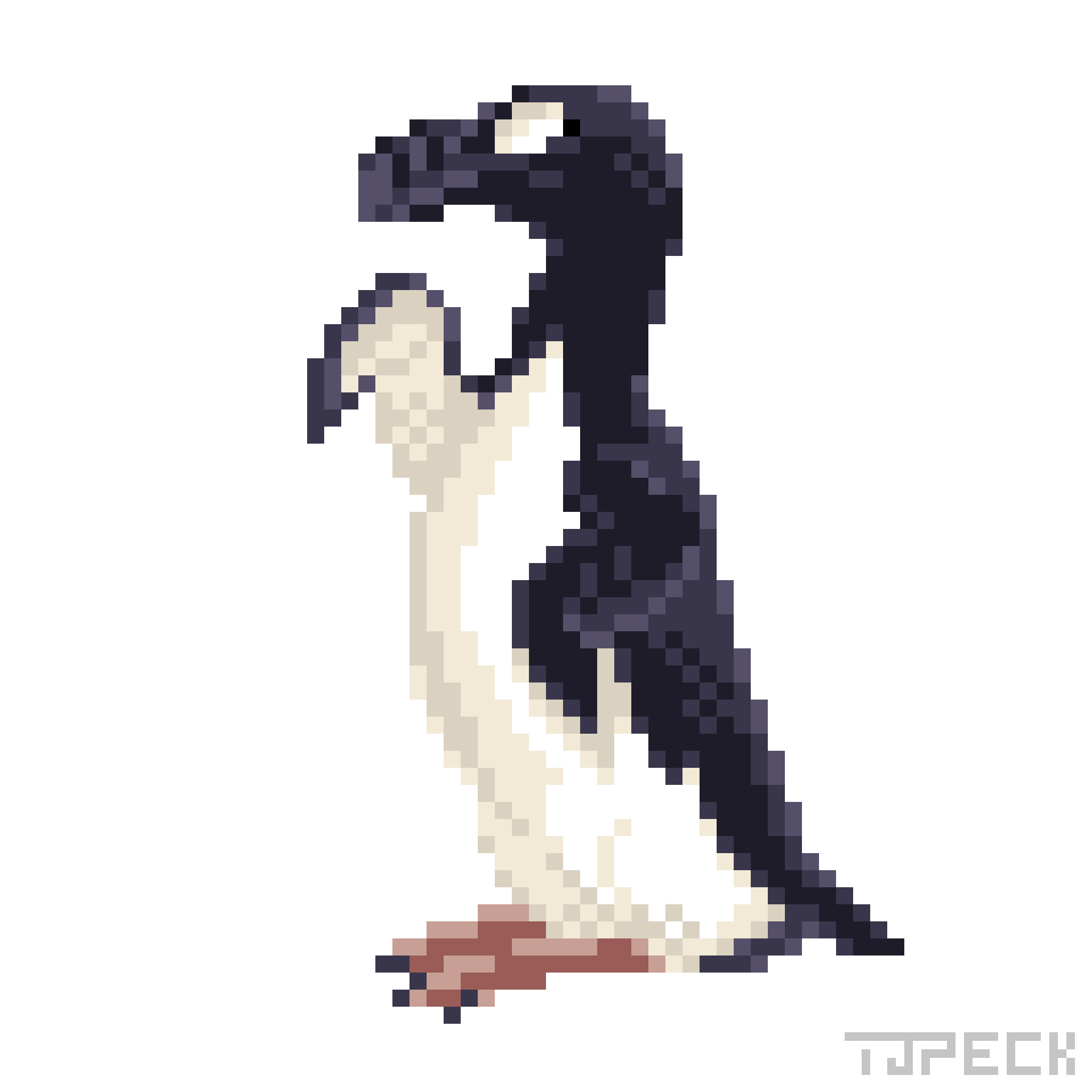
Great Auk (Pinguinus impennis)
Seeing a skeleton or taxidermy of the extinct great auk in a museum today, obvious comparisons to the extant, popular penguins would be difficult to avoid - and for good reason. Auks, such as puffins and guillemots, are already countershaded polar seabirds with piscivorous appetites, much like their unrelated penguin counterparts in the Southern Hemisphere. The great auk took these similarities even further as it was completely flightless and as helpless on land as it was graceful in the water. As tempting as it is to call the great auk “penguin-like”, history tells us that it might be more accurate to describe penguins as “great auk-like”. Indeed, the great auk was actually the first bird to be called a penguin. When Europeans later found “true” penguins in the Southern Hemisphere, they named these new birds after the then-familiar great auks of their homelands. Sailors would even colloquially lump penguins and great auks together as “woggins”. The auk’s range once stretched across most of the North Atlantic, where it influenced history even more profoundly. In Newfoundland, Native Americans used great auk beaks in burial rituals and their eggs were used to create pudding. As for the Europeans, the vikings of Iceland observed great auks migrating westward and later returning with the change of seasons. It’s been suggested that this eventually inspired Leif Erickson to sail west and ultimately set foot in North America. Great auks became increasingly overhunted in the 16th-19th century for their feathers and eggs and the last pair were brutally slain in 1844 for the museum trade, but this flightless bird’s legacy lives on as a surprising instigator of history and a classic example of convergent evolution.